Showing posts with label information security. Show all posts

Thursday, March 19, 2009

ITC evicts squatter from Indian Domain Name

ITC Ltd has won the case against a cybersquatter who had registered the domain name of its flagship brand Wills. Under the provisions of the .IN Domain Name Dispute Resolution Policy (INDRP), ITC alleged and proved that the domain name registered by UK-based cybersquatter Mark Segal of Namegiant.com, was identical to its trademark and misleading as to its origin.

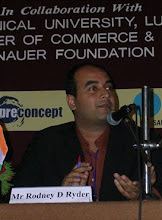
Says Rodney D Ryder, Partner and Head of the Technology Practice at Law Firm Kochhar & Co, which represented the Kolkata-headquartered company, “The domain name is the virtual address of a company, a web mark so to speak. Allowing this domain name registration would be harmful to the ITC/Wills brand as this could also have serious consequences for the company under the Amended Information Technology Act of 2000.” Under the provisions of this act, if a corporate body does not take reasonable security measures to safeguard its data, it could be held liable for any lapse in its data security. The company will be liable to pay compensation up to Rs 5 crore to the parties who has been caused wrongful loss due to deficiency in the security measures adopted by the company.

Registrations under the .in domain have been open since February 2005. Till now, 5 lakh Indian top level domain name extensions have been registered. It is expected in 2 years to cross to 10 lakh registrations. There have been 79 domain name disputes been resolved so far by through The National Internet Exchange of India (NIXI) under the INDRP. Under the Trademarks Act and the Indian Arbitration & Conciliation Act of 1996 cybersquatting disputes are required to be resolved within 45 days up to two months.

Cybersquatting does not only lead to the dilution and/or tarnishment of the brand; if brand owners continue to ignore these sites, such acquiesce could act as a limitation to infringement/cybersquatting actions in the future. Also, this could morph into a phishing or vishing scam or some other dangerous instance of cyber fraud. The domain names should rightfully belong to the brand owner.

In addition, with the enactment of the Information Technology Amendment Act, 2008, the organisation under various provisions has the responsibility to ensure that ‘...reasonable security measures’ are put in place. The organisation could be liable in the event that it ‘acquiesces’ or ‘allows’ its intellectual property or corporate identity to be misused.

Monday, May 19, 2008

Deter, detect & defend cyber crime: the new age mantra [India]


"It is not only one company or organization, but the entire industry and consumers joining hands and taking collective responsibility which is required to tackle the growing menace of cyber crime", emphasized Mr Deepak Maheshwari, Director-Corporate Affairs, Microsoft India Pvt. Ltd at the Seminar on Information Security "Building Trust in Computing", organized by the Confederation of Indian Industry (CII), along with Department of Information Technology and Computer Emergency Response Team-India (CERT-In) in Mumbai.
Mr Maheshwari said that with more and more people having criminal background using internet, online security and online safety have gained paramount importance. "We must secure our computers with technology and act in ways that help protect us against risks that come with internet use", explained, Mr Maheshwari. He further detailed various steps like turning on firewalls, use of automatic updates, installing and maintaining antivirus and anti spy software to meet online risks and threats to computers, families and personal information.Mr Mukund Pawar, Inspector with Mumbai Police – Crime Branch present at the occasion put forth the role of police and their endeavors in controlling, detecting, investigating and punishing persons involved in cyber crime. In response to queries on ways and means employed by Mumbai police to control cyber crime, Mr Pawar explained with the help of number of cases ranging from innocent cyber pranks to major cyber thefts, which the crime branch Mumbai police had registered and dealt, resulting in punishing the culprits. He assured the audience that the Mumbai Police was well equipped to tackle any threats in cyber crimes. He suggested the need to scale up this initiative of CII to reach out to more consumers. "Cyber culprits are from different strata of society which show the widespread reach of cyber crime", said Mr Pawar. He also released a resource kit consisting of a CD, posters and website which will be made available to school children as a part of this campaign.
Mr Vikram Shah, President – India Operations, NetApp said that "We must treat internet information as an asset. As individuals we are entrusting someone else with our online assets. Where some are trust worthy, others might not be", cautioned Mr Shah. He further mentioned that most of the companies now had training programmes and information systems for all employees, implying how companies are becoming sensitive towards security of information. Commending on the initiative taken by CII, Mr Shah stressed that it was a right step towards raising awareness among the youth and children, who are the potential targets of cyber crime.Speaking on safeguarding online identities and fraud prevention was Dr Shekhar Kirani, Vice President, Verisign who said that phishing is a global threat where India is the third largest phishing sites hosting country. "Phishing sites have increased from 4000 to over 55000 in 18 months with the result that consumer distrust is growing at alarming speeds", emphasized Mr Kirani. He went on to explain various steps to be taken for identity protection like avoiding public unsecured computers for logging on to online banks accounts, ensuring the padlock sign on the sites, presence of security certificates providers seal on sites, among others. "This CII effort is spread across six cities: Delhi, Mumbai, Kolkata, Chennai, Chandigarh and Bangalore. In these cities we will be reaching out to 30 schools targeting more than 3000 children. This CII initative is designed to raise consumer awareness about cyber crime targeting the children and youth who are increasingly using online facilities", said Mr Vikram Tiwathia, Chief Information Officer, CII. Emphasizing the importance of safe online access and sharing, Mr Tiwathia said that information security is not as much of a technical requirement but a social aspect.The Seminar is a part of the ongoing CII campaign, which brought together participants from the banking, finance, government and consumers to a common platform to share views, thoughts, experiences and solutions to safeguard the Indian economy from cyber crime.