Showing posts with label intellectual property. Show all posts

Thursday, August 27, 2009

Foley & Lardner Sued for Allegedly Revealing Trade Secrets [United States]

A patent holding firm has sued Foley & Lardner for allegedly revealing confidential information and for undermining the company's settlement negotiations during a separate lawsuit.
Virginia-based SPH America, a company formed in 2008 by former Fish & Richardson associate Choongoo Park, filed suit against Foley Friday at the U.S. District Court for the Eastern District of Virginia, alleging breach of contract, misappropriation of trade secrets and contract interference, among other claims.

Foley represented Japanese electronics manufacturer Kyocera in 2008 after SPH brought a patent infringement case against the company over technology used in its cell phones. According to last week's complaint, Foley allegedly publicized confidential information it gained during the course of that case by incorporating it in another lawsuit.
The new suit, filed for SPH by Kevin Mun of Virginia's Echelon Law Group, states that during settlement negotiations in the 2008 case, SPH revealed that it had patent rights to 3G wireless technology that allows cell phones to carry high speed internet applications. SPH said it kept those patent rights "confidential," and shared information about them under a non-disclosure agreement. Moreover, SPH claims it informed Kyocera -- represented by Foley partners David Kleinfeld and Kurt Kjelland and senior counsel Steven Foley -- that it did not plan to sue the company over those patents.
In February 2009, Foley filed a complaint in the Southern District of California on behalf of Kyocera, asking for a declaratory judgment that it had not violated any of the 3G patents. The suit, signed by Kjelland and Foley, identified the patents by name and quoted pieces of SPH's settlement talks with Kyocera.
"Neither Foley nor Kyocera notified SPH America, let alone obtained SPH America's consent, prior to filing the complaint, nor did they even attempt to file the complaint under seal or with redaction," SPH claims in its complaint.
The new suit also claims that Foley lawyers published SPH's patent infringement charts, which they acquired during discovery. The charts were made public when the firm asked the U.S. Patent & Trademark Office to re-examine two of SPH's patents. According to the SPH, the infringement charts were "attorney eyes only" under the terms of a court order.
SPH also claims that Foley lawyers violated a protective order issued by the U.S. International Trade Commission, where the patent firm had also sued Kyocera.
Aside from revealing confidential information, SPH also claims that Foley partners distorted SPH's infringement position towards Kyocera, which "undermined" the patent firm's position during settlement negotiations.

Monday, April 06, 2009

New York District Court Rules That State Common Law Copyright Claims Are Not Barred by the Communications Decency Act [United States]

The Southern District of New York issued a ruling in Atlantic Recording Corp. v. Project Playlist, No. 1:08-cv-03922-DC, denying Defendant Playlist’s motion to dismiss Plaintiffs’ state law copyright infringement and unfair competition claims. In its ruling, the Court found that the Communications Decency Act ("CDA") does not apply to state or common law copyright claims (such as those that protect sound recordings fixed prior to 1972). The recent decision diverges from the Ninth Circuit’s 2007 ruling in Perfect 10, Inc. v. CCBill, LLC., 488 F.3d 1102 (9th Cir. 2007), which suggested that the exception to the statutory immunities of the Communications Decency Act for claims "pertaining to intellectual property" might not reach (and thus the CDA would bar) state or common law claims that involve or relate to intellectual property or related rights.


Project Playlist involved claims brought by six record labels (affiliated with the Warner Music Group and the Universal Music Group), against the owner and operator of a website that enables and allows users to search, play, share, and download music available on the Internet. In addition to claims for direct and secondary liability under federal copyright law, Plaintiffs asserted claims for common law copyright infringement and unfair competition under New York state law with respect to Defendant’s infringement of Plaintiffs’ pre-1972 sound recordings. (There is no federal copyright protection for sound recordings produced before February 15, 1972. 17 U.S. C. 301(c).) In response to the Complaint, Defendant moved to transfer venue to the Northern District of California. In the alternative, Defendant moved to dismiss Plaintiffs’ state law claims for common law copyright infringement and unfair competition as barred by the CDA, 47 U.S.C. § 230.

Congress passed the CDA in 1996 with the goal of protecting minors from obscene online content. In order to avoid stunting the Internet’s growth, the Court also immunized Internet service providers from liability based on certain communications by users of the services. That immunity was codified in Section 230(c)(1), which provides that "[n]o provider or user of an interactive computer service shall be treated as the publisher or speaker of any information provided by another information content provider." The CDA defines "information content providers" as companies that play a role in the creation or development of content. In other words, persons or entities that create or develop content to be disseminated on the Internet may be subject to liability for that content, while those who merely transmit or publish that content ("interactive computer services") cannot be held liable.

The relationship between the immunities of the CDA and claims for infringement or violation of state or common law intellectual property rights has been a matter of some controversy.

Under Section 230(e)(2), the CDA shall have "[n]o effect on intellectual property law. Nothing in this section shall be construed to limit or expand any law pertaining to intellectual property." In CCBill, the Ninth Circuit held that the Section 230(e)(2) carve-out was limited to federal intellectual property law, and thus would not apply to state law right of publicity claims, even though such claims arguably involved "intellectual property" rights. By contrast, in Universal Communication Systems, Inc. v. Lycos, Inc., the First Circuit, considering a state law trademark dilution claim, reasoned that "[c]laims based on intellectual property laws are not subject to Section 230 immunity." 478 F.3d 413 (1st Cir. 2007). In an effort to avoid liability for its role in copying and disseminating pre-1972 sound recordings, Project Playlist argued that it was an "interactive computer service" and thus immune from liability under the CDA. Noting that this was an issue of first impression in the Second Circuit, the Court relied on First and Third Circuit precedent to find that "an interactive computer service is not liable where it posts or links to a third-party’s content." The Court concluded that Playlist is an "interactive computer service" and thus (as a threshold matter) fell within the broad scope of the CDA because it "merely creates an interface for users of Playlist’s Website to listen to third-party content, and also provides links to download third-party content."

The Court then turned to the second issue: Whether the CDA’s exception or carve-out for "any law pertaining to intellectual property" would apply to state law or common law copyright claims. Citing CCBill, Playlist argued that the carve-out only applies to federal intellectual property law, and thus the CDA necessarily would bar the Plaintiffs’ state law claims for the pre-1972 sound recordings. The Court disagreed, finding that to limit the Section 230(e)(2) carve-out solely to federal claims was contrary to the plain language of the statute, as well as the intent of Congress:

The problem with Playlist’s argument is that it lacks any support in the plain language of the CDA. In four different points in Section 230(e), Congress specified whether it intended a subsection to apply to local, state, and federal law.... It is therefore clear from the statute that if Congress wanted the phrase "any law pertaining to intellectual property" to actually mean "any federal law pertaining to intellectual property," it knew how to make that clear, but chose not to.
As a result, the Court concluded, unambiguously, that "as a matter of law... Section 230(c)(1) [of the CDA] does not provide immunity for either federal or state intellectual property claims." This conclusion, if adopted by other courts, could give a boost to the viability of a range of state law claims related to intellectual property - such as common law misappropriation, right of publicity, and state or common-law trademark law claims - brought against the operators of various online services.

Thursday, March 19, 2009

ITC evicts squatter from Indian Domain Name

ITC Ltd has won the case against a cybersquatter who had registered the domain name of its flagship brand Wills. Under the provisions of the .IN Domain Name Dispute Resolution Policy (INDRP), ITC alleged and proved that the domain name registered by UK-based cybersquatter Mark Segal of Namegiant.com, was identical to its trademark and misleading as to its origin.

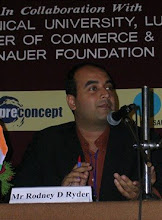
Says Rodney D Ryder, Partner and Head of the Technology Practice at Law Firm Kochhar & Co, which represented the Kolkata-headquartered company, “The domain name is the virtual address of a company, a web mark so to speak. Allowing this domain name registration would be harmful to the ITC/Wills brand as this could also have serious consequences for the company under the Amended Information Technology Act of 2000.” Under the provisions of this act, if a corporate body does not take reasonable security measures to safeguard its data, it could be held liable for any lapse in its data security. The company will be liable to pay compensation up to Rs 5 crore to the parties who has been caused wrongful loss due to deficiency in the security measures adopted by the company.

Registrations under the .in domain have been open since February 2005. Till now, 5 lakh Indian top level domain name extensions have been registered. It is expected in 2 years to cross to 10 lakh registrations. There have been 79 domain name disputes been resolved so far by through The National Internet Exchange of India (NIXI) under the INDRP. Under the Trademarks Act and the Indian Arbitration & Conciliation Act of 1996 cybersquatting disputes are required to be resolved within 45 days up to two months.

Cybersquatting does not only lead to the dilution and/or tarnishment of the brand; if brand owners continue to ignore these sites, such acquiesce could act as a limitation to infringement/cybersquatting actions in the future. Also, this could morph into a phishing or vishing scam or some other dangerous instance of cyber fraud. The domain names should rightfully belong to the brand owner.

In addition, with the enactment of the Information Technology Amendment Act, 2008, the organisation under various provisions has the responsibility to ensure that ‘...reasonable security measures’ are put in place. The organisation could be liable in the event that it ‘acquiesces’ or ‘allows’ its intellectual property or corporate identity to be misused.

Tuesday, March 17, 2009

Facebook sues Cayman Islands firm, alleges intellectual property infringements [International]

US-based social networking company Facebook has sued a Cayman Islands corporation and related parties for allegedly violating its intellectual property rights. According to Miami-based financial newsletter OffshoreAlert, details are contained in a civil complaint filed by Facebook, Inc., a Delaware corporation, at the United States District Court for the Northern District of California.
Defendants in the complaint are Power Ventures, Inc., a Cayman Islands corporation; Power Ventures, Inc., d.b.a. Power.com, a California corporation; Steven Vachani, who "purports to be the CEO of Power.com"; and John Does, OffshoreAlert reported. "This action arises from Defendants' infringement of Facebook's trademarks and copyrights, their unauthorized solicitation, storage and use of Facebook users' login information to gain unauthorized access to Facebook's protected computer network and the unauthorized use of Facebook user accounts to send unsolicited commercial messages to other Facebook users,” the complaint stated Facebook is one of the most popular social networking sites on the Internet and now has more than 132 million active users worldwide.
Facebook tightly controls access to its network, and implements a variety of features in order to protect the privacy and security of its users' personal information. One such security measure is the prohibition of soliciting or sharing user login information (i.e. username and password). OffshoreAlert reported that the defendants operate a website that offers to integrate multiple social networking accounts. “They have knowingly and willfully disregarded Facebook's protocols and procedures for accessing information stored on Facebook computers, and are offering a product that solicits, stores, and uses Facebook login information to access information stored on Facebook computers without authorization, and to display Facebook copyrighted material without permission.
The defendants are also inducing Facebook users to provide them with email addresses of their Facebook contacts ("Friends") for the purpose of sending unsolicited commercial messages that purposefully and falsely state that they come from "The Facebook Team" the complaint stated. The defendants have reportedly ignored repeated requests from Facebook to respect its intellectual property rights. They have also refused to cease their unauthorized access of Facebook's computer system, and to stop interfering with its relationships with its users. They have essentially admitted that their business violates Facebook's rights, but they informed Facebook that they made a "business decision" to continue on with the activities.

Microsoft, Lexmark in cross-licensing deal [International]

Microsoft Corp. and Lexmark International Inc., which makes printers and imagining equipment, have struck a cross-licensing deal, the companies said on March 17 [2009]. The agreement covers a range of Lexmark printers and Microsoft software, but the companies did not disclose specific products or financial details.


"Because both Microsoft and Lexmark have access to an extensive range of technologies, this agreement will allow each company to shorten its development cycle and increase its focus on customer-related innovation," said David Kaefer, Microsoft's general manager of intellectual property licensing, in a statement.


Microsoft shares rose 45 cents, or 3 percent, to $16.73 in afternoon trading, while Lexmark, based in Lexington, Ky., saw its stock jump 55 cents, or 3.4 percent, to $16.90.

37 patents filed for Nano by Tata Motors [India]

In its bid to protect from imitations world-over, Tata Motors has apparently applied for 37 patents for its Nano, as per a report carried in The Economic Times. Furthermore, it is in the process of filing Intellectual Property Rights (IPRs) claims for Nano in overseas markets, as quoted by a company official, adding that most of the patent applications filed before 2007 have already been granted.

It may be recalled that Nano has been developed to cater to the demands from developing as well as developed markets equivocally and there have been numerous innovations and inventions incorporated in the car that make the car unique.According to The Economic Times, the company has used a number of new concepts and ideas to develop this vehicle and patents will help in protecting some of its innovative ideas, as claimed by well-informed sources.. The move is also expected to help Tata Motors to sell the car in markets such as Africa, Southeast Asia, Eastern Europe and Latin America.

Tuesday, March 10, 2009

Pre-1923 Publication not in Copyright Public Domain [United States]


In Societe Civile Succession Richard Guino v. Renoir, (9th Cir., December 2008), the court held that works first published in France no later than 1917 without a U.S.-style copyright notice were never subject to U.S. copyright under the 1909 Copyright Act, and therefore could not have fallen into the public domain in the U.S.


This holding is particularly interesting because, as the Ninth Circuit noted, "[t]he year 1923 is significant because the 1976 Act . . . and the 1998 Copyright Extension Act operate together to create a bright line rule for which works are now in the public domain: works published before January 1, 1923 are generally in the public domain." This rule is even noted in Copyright Office Circular 22 which states

. . . the U.S. copyright in any work published or copyrighted prior to January 1, 1923, has expired by operation of law, and the work has permanently fallen into the public domain in the United States. For example, on January 1, 1997, copyrights in works first published or copyrighted before January 1, 1922, have expired; on January 1, 1998, copyrights in works first published or copyrighted before January 1, 1923, have expired. Unless the copyright law is changed again, no works under protection on January 1, 1999, will fall into the public domain in the United States until January 1, 2019.

The works at issue were sculptures by the famed artist Renior and one of his assistants Richard Guino.

Monday, March 09, 2009

Bills Creating Performance Right for Recording Artists Are Reintroduced in Congress [United States]

Senators Patrick Leahy (D-VT) and Orin Hatch (R-UT) and Representatives John Conyers (D-MI) and Darrell Issa (R-CA) introduced bills -- S. 379 and H.R. 848, each referred to as the "Performance Rights Act" - that, for the first time, would require United States broadcast radio stations to pay licensing fees to performers of music. If passed, the bills would constitute a long-awaited change to the current broadcast licensing regime, in which broadcasters make payments to the owners of copyrights in musical compositions, but not to the performers (and record labels) that own copyrights in and/or contribute to sound recordings. The current bills are an attempt to bring the United States into conformity with the rest of the world. Nearly every industrialized nation other than the United States already requires radio broadcasters to compensate performers. However, because the United States does not provide compensation for foreign performers, many foreign broadcasters do not pay for publicly performing songs recorded by U.S. performers.
Upon introducing H.R. 848, Representative Issa remarked that "we have a opportunity to show the rest of the world that the United States practices what it preaches in protecting intellectual property.... Our ignorance of intellectual property rights on this issue is a worldwide embarrassment and it must end now." The absence of a public performance right in sound recordings has inspired a long string of failed attempts to create parity among songwriters and performers. Ironically, in 1995, these attempts to obtain parity resulted in a more fragmented legal regime. At that time, Congress passed the Digital Performance Right in Sound Recordings Act, which requires digital "webcasters," but not radio broadcasters, to compensate performers. As a result, performers currently are compensated when their songs are played online but not over the radio, while songwriters are compensated in both instances. In their current form, S. 379 and H.R. 848 would amend sections 106(6) and 114 of the Copyright Act, which grant limited public performance rights to sound recordings and establish statutory licensing schemes to determine rates applicable to public performance of sound recordings, respectively. In order to curb criticism and opposition, the House and Senate versions of the Performance Rights Act contain provisions limiting the scope of the new right provided to performers.
These limitations include:
Available statutory (i.e., "compulsory") licensing with rates set by the Copyright Royalty Judges, who also currently set rates for online digital public performances of sound recordings, among other things.
Exemptions for nonsubscription transmissions of services at places of worship or other religious assembly, as well as "incidental" use of sound recordings.
An annual $1,000 blanket statutory license for noncommercial (i.e., public, educational, or religious) radio stations.
An annual $5,000 blanket statutory license for commercial radio stations that generate less than $1.25 million in annual revenue (which the bills' sponsors believe will cover over 75% of the commercial radio stations in the U.S.).
Available "per program" statutory license rates for broadcast radio stations that make "limited feature uses" of sound recordings.
Provisions to ensure that songwriters and composers continue to receive fair compensation for public performances of their works despite the increased costs to broadcasters associated with paying performers.
Retention of a distinction between musical works and sound recordings such that venues that play recorded music (such as clubs and bars) would continue to pay songwriters but not performers.
Provisions requiring 50% of the royalties paid through statutory licensing of sound recordings to go to "featured" performers and "non-featured" musicians and vocalists rather than solely to copyright owners of the sound recordings. (The House bill would also require 50% of royalties earned through voluntary licensing of sound recordings for public performances on broadcast radio to be paid to "featured" performers and "non-featured" musicians and vocalists, whereas the Senate bill would not.)The bills face some opposition, especially from radio broadcasters. The National Association of Broadcasters ("NAB"), an opponent of the bills, maintains that requiring radio stations to compensate performers "will harm your local radio stations [and] threaten new artists trying to break into the business." NAB also claims that the bills will undo the promotional "symbiotic relationship" that currently exists between radio stations, record labels, and performers. In the last Congress, such arguments inspired 227 members of the House of Representatives and 14 Senators to support Congressional resolutions (H. Con. Res. 244 and S. Con. Res. 82) opposing radio royalties for performers. However, organizations that speak for musicians contend that the promotional value of free radio play does not justify the absence of protection for sound recordings. For example, Ann Chaitovitz, the Executive Director of Future of Music Coalition, has argued that "the promotional claim is irrelevant. Authors often see sales spikes when their books are made into movies, but no one would suggest that the writer shouldn't be paid when their work is translated to the screen because the film is 'promotional'."
The bills' sponsors have publicly stated that they are willing to work with all interested parties to see these bills through to law even if that requires amendments. So the final form of the bills may differ significantly from their current form. In the meantime, the bills have a strong base of support, and many believe that the bills have a strong chance of becoming law.

Sunday, March 08, 2009

Design Day 2009 to Be Held at the USPTO Conference [United States/International]

The United States Patent and Trademark Office (USPTO) announced in a press release that it will host its third annual Design Day at the agency’s headquarters in Alexandria, Virginia next month.


The event will be co-sponsored by the American Intellectual Property Law Association, the Intellectual Property Owners Association and the American Bar Association Section of Intellectual Property Law.

The Design Day is being organized by Technology Center 2900 and is open to design patent practitioners and USPTO examiners.

This program will provide an opportunity for design managers, examiners, independent inventors and the design patent bar to exchange ideas and to educate each other on important topics affecting design patent practice.
Program topics will include:
- Adequately Disclosing Multiple Embodiments - Application Processing: Allowance to Issue- A presentation and discussion of the recent CAFC en banc decision in Egyptian Goddess v. Swisa Inc.- A keynote address by Randall Rader, United States Court of Appeals for the Federal Circuit on the future of design patent law.

Trademark fee cut in the United Kingdom: Could price wars loom? [United Kingdom]

A price war looked set to break out on Monday over trademark fees, as the UK’s Intellectual Property Office proposes its first cuts in charges for more than a decade. The move comes just days after European Union countries agreed to let the European trademark office – formally known as the Office of Harmonisation for the Internal Market – cut its fees by 40 per cent.

The cuts by the IPO are expected in particular to benefit small and medium-sized companies that often find the costs of protecting their intellectual property onerous. The IPO will unveil on Monday proposals to reduce its fees for trademark applications made electronically by 15 per cent, and offer additional price reductions for companies that want to oppose applications.

It will also give companies more ability to pay only part of the application fee up-front, meaning that less money should lost when applications are abandoned. The proposed reductions will be subject to consultation before coming into force in October.

The Alicante-based OHIM issues the “community trademark”, an intellectual property right that applies across the 27-country EU bloc, while the IPO – like other national offices in Europe – administers lower-cost trademarks that give domestic protection only. Some EU countries were concerned that the OHIM’s move, which was prompted by unexpected popularity of the community trademark and subsequent financial surpluses at the office, might undercut business at their national offices. The UK move comes after a decline in domestic applications for patent and trademark applications, which fell 12 per cent last year.

Friday, January 02, 2009

From Assets to Profits: New Book on Intellectual Property

If intellectual property never comes of age as a mainstream topic for investors and corporate strategists, it won't be Bruce Berman's fault.

As CEO of Brody Berman Associates in New York, a communications and management consulting firm that focuses on innovative businesses and intellectual assets, Berman has been a tireless proponent of the importance of IP and attendant issues. Not coincidentally, he's also quite a networker in the community of IP thinkers and practitioners.
Those two characteristics have enabled Berman to assemble some of the better books on the subject of IP -- including his new offering, From Assets to Profits, which follows Making Innovation Pay (2005) and From Ideas to Assets (2002), all from John Wiley & Sons, Inc.
Contributors to the current volume (along with Berman himself) include the heads of IP business at Hewlett-Packard Co. and Goldman Sachs; the former head of IP business at Lucent and IBM Research; and IBM Corp.'s former VP of IP strategy, among others. Each in turn examines a facet of IP. A few highlights:
Berman kicks things off with a chapter on IP investing and the spectrum of people--some controversial, some less so--who do it. "Has today's more contentious, bottom-line approach for managing IP rights improved innovation, patent quality, or increased shareholder value?" he asks. "Probably. But you won't hear most strategic IP owners admitting that."
John A. Squires chief IP counsel for Goldman Sachs & Co., contributes a chapter on IP in financial services. In finance, Squires says, "patents are generally designed for, and deployed primarily by, the founders of the venture as a functional edge for the operational risk that the venture may incur in the future." Squires goes on to show how patent issues figured in the formation and launch of Regulatory DataCorp LLC (RDC), a for-profit database and interdiction software venture now owned by twenty of the world ' s leading financial institutions.
Another interesting chapter is "The Evolving Role of IP in M&A: From deal-breaker to deal-maker." This one was written by Ron Laurie, the veteran silicon valley IP lawyer who wrote the first internet business-method patent, for Priceline's reverse auction. "IP," he writes, "was traditionally viewed in M&A transactions as a possible deal-breaker, effectively an afterthought that IP lawyers attended to. When it came to consummating a transaction, these professionals were much more likely to regard all news as bad news."
Today, Laurie says, IP in M&A is starting to be seen as an important deal facilitator that bankers, private equity capital providers, and others need to understand from the start.
You can find out more about the book (and about Berman) on the Brody Berman website.

Evalueserve Study: India to Emerge as Global Innovation Hub

India will emerge as the next global hub for innovation, according to a study on "R&D Ecosystem in India" conducted by Evalueserve and released by the British High Commission and the Canadian High Commission in India.


India targets to increase its R&D spend from less than 1 percent of GDP to 2 percent by 2012 under the 11th Five-Year Plan. The move will catapult India to the league of developed nations that spend 2.5 percent of their GDP on R&D on an average.

The Indian R&D ecosystem comprises various supporting infrastructure, government departments, research organisations, funding institutions and industry associations. The government is focusing on public-private partnerships, such as knowledge parks and incubator programmes, to promote commercialisation, transfer and diffusion of technology.

Angel investors and venture capitalists also have an important role in the commercialisation process, given the limited availability of funding for early stage companies and innovators. Further, venture capitalists are also providing a lot of late-stage funding. The number of private equity/venture capitalist deals in late-stage funding rose from 33 in 2005 to 104 in 2006, while the number of early stage funding deals rose from 19 in 2005 to 59 in 2006.

That India is becoming increasingly conducive to innovation is evident from the fact that the total number of patents filed in the country has increased significantly. The number of patent applications filed grew at a CAGR of 23.3 percent, from 10,592 in 2001-02 to 24,505 in 2005-06. The growth accelerated after India became Trade-Related Intellectual Property Rights (TRIPS) compliant in 2005.

Some IPR issues currently faced by India include low awareness on IP protection and longer patenting process. The Federation of Indian Chambers of Commerce and Industry (FICCI) drafted the Public Funded Research and Development (Protection, Utilisation and Regulation of Intellectual Property) Bill, 2007, an indigenous version of the Bayh-dole Act, to address these issues. The new legislation will emphasise education opportunities in science, technology, engineering and mathematics, and help R&D institutions and scientists to own the intellectual property they create.

Access the complete report at http://www.evalueserve.com/Media-And-Reports/WhitePapers.aspx.

Evalueserve provides custom research and analytics services to a client base of Global 5000 companies, in the following areas - Financial and Investment Research, Business Research, Market Research, Intellectual Property, Expert Network, Data Analytics and Modelling and Knowledge Technology Services. We currently have 2,475+ professionals in our research centres in India, China, Chile & Romania.

Monday, November 24, 2008

L'Oreal takes MyDollarStore to High Court over illegal imports [India]

French cosmetics and toiletries giant L’Oreal has hauled discount retailer MyDollarStore to court over issues relating to intellectual property rights (IPR) and illegal imports, it is learnt. The company has filed a case against MyDollarStore in the Delhi High Court recently.
In recent times, MNCs have been upset over the move by retailers to import top global brands, claiming that this leads to loss of business opportunity, unfair competition and product cannibalisation. However, sources said hectic parleys are on between the two parties and the talks could lead to an out-of-court settlement.
MyDollarStore is a discount store chain which set up shop in 2004 and now has 47 stores across several cities. Most of the stores are located in malls and near Big Bazaar outlets. The chain plans to scale up presence across most Big Bazaar outlets. The discount store is associated with basement bargains in the US. MyDollarStore formats price products at Rs 99 and above in India, and are perceived as expensive by bargain seekers. While products are priced at $1 (approximately Rs 48.9) at a MyDollarStore outlet in the US, the same products sell at a higher rate in India owing to transportation costs and import tariffs. L’Oreal source said the company was concerned about protecting the properties of its brands, which include quality and consumer perception. “We distribute the brand in a way that ensures a certain value around it. An unplanned distribution creates confusion or leads to an unpleasant consumer experience which may work against our brand,” the source said. L’Oreal India has recorded an attractive growth rate of over 40% plus in the country, and globally it has identified India as one of its top five markets. Sources said the company fiercely guards its right to market and distribute its brands in India.
Several MNCs have invoked the Intellectual Property Rights (Imported Goods) Enforcement Rules 2007 Act to stop retailers from importing their foreign brands. Companies like Hindustan Unilever, L’Oreal, Lancome Perfumes, Oakley, Nivea and Mico have already registered several brands under notification No.47/2007 of the IPR Act with the Customs. Recently, Future Capital picked up 28% in Sankalp Retail Value Stores, a franchisee of the US-based discount format MyDollarStore. The format is expected to help scale up profit margins at Big Bazaar and is being set up as a ‘shop-in-shop’ concept. MyDollarStore outlets usually stock limited top brands like Coke and generally sell other lesser-known brands. But lately they have been stocking well-known brands, including that of L’Oreal like Garnier, etc. Big Bazaar & Food Bazaar, Reliance Retail, Spencer’s and MyDollarStore import sizeable consignments of top consumer brands and their variants from markets like Taiwan, Thailand, Gulf and the US. L’Oreal operates in India through its wholly-owned subsidiary L’Oreal India and has four divisions—consumer products, professional products, active cosmetics and luxury products.

Patent officers should coordinate to bring uniformity in standards [India]

Many of India’s pharma companies, including even the big and transnational ones who themselves have some stake in innovation and R&D, are alleging that patent authorities in India have become very liberal when it comes to grant of patents. Many frivolous patents have been granted and even bogus applications are being entertained, they say. The Indian Pharmaceutical Alliance, a group of big India-born drug companies, is mulling a thorough study of the patents granted since 2005 to find out how many of these are in fact ‘bad patents.’ At the other end of the scale, the foreign pharma companies not only brush aside the allegation of granting patents for ‘trivial inventions’ but also aver that “a lot of important applications” have in fact been turned down by India’s patent authorities. The question that underlies this row is what’s a ‘patentable invention’. At a very general and non-codified level, the newness or rather the surprise element of an invention should be the deciding factor.

The World Trade Organisation’s Trade-Related Intellectual Property Rights (TRIPS) agreement defines the term ‘patentable subject matter’ with due considerations to present-day commercial realities—it says an invention should be “new, involve an inventive step and capable of industrial application” to be deserving of a patent. National governments have drawn a lot of freedom from the TRIPS agreement itself and even autonomously to elaborate on the TRIPS definition. However, national laws of many countries, including the US, are framed in such a way that even “incremental, adaptive or cumulative” inventions could qualify for patents if such invention has a definitive industrial use and thereby considerable commercial value. Indian government has been chary about unfair patenting—thanks to lobbying by domestic industry and the unrelenting stand of leftist outfits. It introduced an additional provision—Section 3(d)—in Patents Act to make patenting criteria more stringent in the pharmaceutical space. This provision was introduced through the third amendment to the Act, which also introduced product patenting for pharma and agrochem inventions.

While the Big Pharma—the large pharmaceutical companies based in the US and EU who hold most of the patents—have been a strident critic of Section 3(d), international organisations like the World Intellectual Property Organisation endorsed it and termed it TRIPS-compliant. According to this provision, incremental inventions (like salts, isomers etc of known molecules) can be patented only if they have contributed to improve the efficacy of the (known) substance. And the patent authorities—read the examiners—would decide if efficacy has really been improved. The current strife over the allegation of the patent authorities practically becoming very liberal in grant of patents would need to be viewed in this context. The fact is India’s Patent Act, even with the fairly elaborate rules notified under it including those to support the Section 3(d), bestows substantial discretionary authority with the patent authorities. Patent examiners in India are still grappling with the complexity of the world of pharmaceutical inventions—the area is abstruse and dynamic enough to baffle even the seasoned examiners. Leaving a lot of things to the discretion of a group of patent examiners is therefore bound to generate conflicts. Here, what the government can do is to create many layers of examiners so that the probability of genuine error can be minimised. But the patent examination, search and grant system in India is currently highly unorganised. The four patent offices—Delhi, Mumbai, Kolkata and Chennai—are yet to achieve a fair degree of cohesiveness among them. These offices, manned by patent controllers and scores of patent examiners who assist them, are allegedly employing separate yardsticks and this is what caused the current allegations and counter-allegations. Clearly, there is a case for a very high degree of coordination between the four patent offices. Patents are anyway prone to contestation. Some disputes would inevitably reach the courts. Such disputes can however be minimised by bringing as much uniformity as possible in standards of patent grant. The Patent Act already provides for pre and post grant opposition and making a review plea before the controller who granted/denied the patent. And there’s the intellectual property appellate board, which is the body for the aggrieved to appeal to. What is lacking is proper coordination among the patent controllers and examiners. The government would do well to address the issue immediately.

Thursday, October 30, 2008

ICANN to allow new top-level domains – warning to brand owners

The Internet Corporation for Assigned Names and Numbers (ICANN) is responsible for the allocation of all top-level domain names. There are presently only a limited number of top-level domains (e.g. .com, .net, .org etc) but ICANN has announced it intends to open the market for any person to create new top-level domains of their choosing.
ICANN has issued a draft "Applicant Guidebook" on which it is inviting comments. The draft guidebook may be seen here. ICANN is inviting comments from the public on the draft guidebook, and states that it will receive comments for 45 days (from 24 October 2008). The draft guidebook states that, during the (as yet undetermined) application period, any "established entity" from any country may apply to operate a top-level domain. The top-level domain proposed may either be an "open" domain, which is available to any type of applicant, or a "community based" domain, which must relate to an identifiable and pre-established community that has endorsed the registration of the domain. The application must show that the applicant will have a dedicated registration and use policy, and that the applicant has the operational, technical, financial and organisational capability to maintain the top-level domain proposed. The draft guidebook states that the proposed registration fee for the new top-level domain will be $185,000. Of particular interest to brand owners, the draft guidebook contains details of the proposed objection mechanism which will allow interested parties to challenge the registration of a new top-level domain. The proposed grounds of objection are:String Confusion Objection – existing operators of top-level domains can complain that a domain applied for is confusingly similar to an existing top-level domain; Legal Rights Objection – a "rightsholder" (which is not defined, but this is likely to mean a trade mark owner or someone with unregistered trade mark rights/reputation) may complain that a domain applied for infringes their rights; Morality and Public Order Objection – the parties who may complain about a domain applied for which is contrary to morality and public order are yet to be determined by ICANN, but they may be limited to Government bodies; and Community Objection – an "established institution" within a defined community may complain about a domain applied for which may be targeted at such community if a significant part of that community substantially objects to the application. The draft guidebook contains a long description of the proposed procedure to be followed if objections are raised to top-level domain applications. The procedure will involve arbitration with set rules similar to a UDRP arbitration that is operated by one of a number of providers (e.g. WIPO). The cost of the procedure is not outlined in the draft guidebook, but it is proposed that String Confusion and Legal Rights Objections should be dealt with by the arbitration provider for payment of a fixed fee, and other Objections should be dealt with for payment of an hourly rate. There is no procedure proposed to notify brand owners if a top-level domain is applied for which features a registered trade mark. As a result, brand owners will need proactively to monitor ICANN's website to see the applications that have been made. There is only a limited time period proposed in the guidebook during which objections may be made to applications. It is therefore very important that brand owners wishing to object to applications do so within the required time period. Otherwise, costly court action might be the only remedy available to brand owners after the new top-level domain is approved. Further information about the proposals may be seen on ICANN's website.

Wednesday, October 01, 2008

Congress Gets Tough On Intellectual Property [United States]

Lawmakers have approved sweeping legislation that is designed to bolster the federal government's ability to protect patents, trademarks, and other intellectual property (IP). The bipartisan legislation, the Prioritizing Resources & Organization for Intellectual Property Act (S. 3325), passed the Senate by unanimous consent on Sept. 26 and cleared the House by a vote of 381-41 two days later.

The bill significantly toughens civil and criminal laws against counterfeiting and piracy, provides law enforcement agencies with increased funding for investigations and prosecutions, and creates a new White House office of IP enforcement coordinator.
"IP makes up some of the most valuable and most vulnerable property we have," Senate Judiciary Committee Chairman Patrick Leahy (D-Vt.) said in a statement. "We need to do more to protect it from theft and abuse if we hope to continue being a world leader in innovation."
The bill is strongly supported by pharmaceutical companies, manufacturers, and others in the business community. "This is a win for both parties and, more important, for America's innovators, workers whose jobs rely on IP, and consumers who depend on safe and effective products," U.S. Chamber of Commerce President and Chief Executive Officer Thomas J. Donohue says.
It's unclear whether President George W. Bush will sign the legislation into law because the Administration opposes the provision that creates a new Cabinet-level post for IP coordination. According to the bill, the IP coordinator will be chair of an interagency committee tasked with devising a worldwide strategic plan to combat piracy and counterfeiting. However, in a joint letter sent to the leaders of the Senate Judiciary Committee on Sept. 23, the Justice and Commerce Departments says the establishment of an IP coordinator within the Executive Office of the President (EOP) is "objectionable" on constitutional grounds as a violation of separation of powers.
"While the Administration has been a longtime supporter of strong inter-agency coordination...the statutory creation of an EOP coordinator with the duties described in the bill constitutes a legislative intrusion into the internal structure and composition of the President's Administration," the letter states.

Thursday, September 11, 2008

India - United States - Copyright Treaty [Intellectual Property]

Protections granted under the Indian Copyright Act apply to U.S. citizens just as it applies to Indian nationals. The current Indian Copyright Act entered into force in 1957 but it is based on the 1911 Copyright Act, which in turn was based on United Kingdom copyright laws. Traditional international copyright principles are part of the Indian copyright legislation. For instance, India grants automatic copyright protection (no registration is required) to literary, dramatic, musical and artistic works, computer software, and cinematograph films and sound recordings for sixty years- some term variations apply. Even though copyrights are automatic, authors may register their works in the Copyrights Register maintained by the Copyright Office of the Department of Education. Ideas are not protected under Indian copyright law nor are titles or names, short word combinations, slogans, short phrases, methods, news, and plots or factual information. To receive protection, works must be original; the joint authorship concept is recognized; and copyrights may be assigned for 5 year if no other time-limit is set. Usually, the author is the owner of the copyrighted work; the government is considered the author of government works. An author is the creator, composer, producer, or photographer -depending on the case, - of the work. In the case of employment-related works under contract of service or apprenticeships, the employer will be the copyright owner unless otherwise provided. Translations are afforded copyright protection just as the original work provided that they are authorized by the author of the original work. Computer programs are protected under Indian law as literary works, and their authors enjoy the right to sell, offer to sell, or give on hire "regardless of whether such a copy has been sold or given on hire on earlier occasion." In general, foreign works mentioned on the International Copyright Order are protected in India as well.
As opposed to the U.S., India grants protection of moral rights. This means, infringement exists when a copyrighted work is distorted, mutilated, modified and these or similar acts affect the author's honor or reputation. Moral rights remain with the author even after the author's death or assignment of the work.

India is signatory to the following international copyright agreements- this means U.S. citizens enjoy the rights and privileges afforded by these international agreements adopted by the Indian legislature,- (a) the Berne Convention for the Protection of Literary and Artistic works; (b) the Universal Copyright Convention; (c) the Convention for the Protection of Producers of Phonograms against Unauthorized Duplication of their Phonograms; (d) Multilateral Convention for the Avoidance of Double Taxation of Copyright Royalties; and (e) the Trade Related Aspects of Intellectual Property Rights (TRIPS) Agreement.

Indian International Copyright Order grants protection to foreign works from the following 116 countries. Indian protection of foreign works from these countries is relevant for U.S. businesses registered under the laws of any of them. E.g. if a U.S. business registered in St. Kitts & Nevis produces a copyrighted work and outsources some activity related to this work to India, India is going to protect that work as a foreign work. The International Copyright Order includes Albania, Argentina, Australia, Austria, Bahamas, Bahrain, Barbados, Belarus, Benin, Bolivia, Bosnia & Herzogovina, Botswana, Brazil, Bulgaria, Burkina Faso, Cameroon, Cape Verde, Central African Republic, Chile, China, Colombia, Congo, Costa Rica , Cote d'Ivoire, Croatia , Cuba, Cyprus, Czech Republic, Democratic Republic of the Congo, Denmark, Dominican Republic, Ecuador, Egypt, El Salvador, Equatorial Guinea, Estonia, Finland, France, Gabon, Gambia, Georgia, Germany, Ghana, Greece, Guatemala, Guinea, Guinea-Bissau, Guyana, Haiti, Holy See, Honduras ,Hungary, Iceland, Indonesia, Italy, Jamaica, Japan, Kenya, Latvia, Lesotho, Liberia, Libya, Lithuania , Luxembourg, Malawi, Malaysia, Mali, Malta, Mauritania, Mauritius, Mexico, Monaco, Mongolia, Morocco, Namibia, Netherlands, Niger, Nigeria, Norway, Panama, Paraguay, Peru, Philippines, Poland, Portugal, Republic of Korea, Republic of Moldova, Russian Federation, Rwanda, Saint Kitts & Nevis, Saint Lucia, Saint Vincent and the Grenadines, Senegal, Slovakia, Slovenia, South Africa, Spain, Sri Lanka, Suriname ,Sweden, Switzerland, Thailand, The Former Yugoslavia Republic of Macedonia, Togo, Trinidad and Tobago, Tunisia, Turkey, Ukraine, United Kingdom, United Republic of Tanzania, United States of America, Uruguay, Venezuela, Yugoslavia, Zambia, Zimbabwe.

Monday, September 08, 2008

Mattel blocks 'Scrabulous' in India [Intellectual Property]

The networking site, Facebook, has restricted the popular “add-on” application, ‘Scrabulous’ to most users. Mattel Inc. owns Scrabble rights outside Canada and the United States of America and had approached the Indian courts in February 2008, seeking an order for taking down Scrabulous from Facebook and other servers.


The brothers, Rajat and Jayant Agarwalla, and their web-design and technology company, R J Software, were previously served a lawsuit by game-making giant Hasbro Inc., owner of Scrabble rights in Canada and the U.S. , at a New York federal court for violating its copyright and trademarks. Hasbro also sent a notice demanding that Facebook remove the application from the site. “Facebook took the unfortunate decision to restrict most users from accessing Scrabulous on August 22, in response to a ‘take down notice’ from Mattel on August 14,” said Mr. Jayant.

Mr. Jayant said, “The High Court had reserved judgement in this matter after hearing both parties. It surprises us that Mattel chose to direct Facebook to take down Scrabulous without waiting for the High Court’s decision.” He also sounded disappointed with Facebook as he said, “It is even more astonishing that Facebook, which claims to be fair and neutral party, took the step even though they were fully aware of the circumstances under which the Mattel letter was sent.”

“We now await the decision of the High Court and shall accordingly decide our future course of action regarding Scrabulous,” Mr. Jayant asserted.

Thursday, July 31, 2008

First Arab Satellite Channel On IP Rights Launched In Egypt

In a bid to promote awareness of intellectual property rights issues and provide information about IP in the Arab world, the first dedicated IP Arab satellite channel has been launched.
Based in Smart Village in Cairo with offices in most major cities of the world, the first independent IPR satellite channel will have exclusive programmes that tackle IPR issues regionally and globally.


The new channel, launched on 7 July and reporting in both Arabic and English, will broadcast on NileSat.

‘The idea behind establishing a satellite channel dedicated to IP rights is to strengthen awareness in IP issues and give a clearer image of the IP situation in the Arab world. The new satellite channel is intended to a credible source of information that satisfies the growing interest in issues relating to IP. It will also contribute to the promotion of IP awareness in the region and around the world,” said Talal Abu-Ghazaleh, chairman of the Talal Abu-Ghazaleh organisation, an Arab organisation for global professional services including intellectual property rights. Abu-Ghazaleh is owner of the new channel.

In 2004, Abu-Ghazaleh launched a one-of-a-kind project, the ag-IP-news agency, a specialised global intellectual property news agency.

Sunday, July 27, 2008

Nobel laureate criticises intellectual property rights system [International]

US economist Joseph Stiglitz has warned that intellectual property rights are stifling innovation. According to the Intellectual Property Watch news service, the professor, who was awarded a 2001 Nobel Prize in Economic Sciences for his work on the relationship of information and markets, said at the opening of Manchester University's Institute for Science, Ethics and Innovation on Saturday that the intellectual property rights regime "closes down access to knowledge". It was clear, he said, that specific restrictions applied particularly in the patent system.

Stiglitz criticised the current approach of treating copyright and patent rights as "intellectual property". Intellectual property, he insisted, is public property and not something to be "owned". It is difficult to prevent others from enjoying its benefits, he said, because it is fundamentally different to, and should not be compared to, the ownership of physical property. This approach creates monopoly power over knowledge that is often abused. Stiglitz gave as an example the current "patent thicket" in software, which results in anyone who writes a successful software program being sued for alleged patent infringements.
Another problem Stiglitz highlighted was that "the social returns from innovation do not accord with the private returns associated with the patent system. The marginal benefit from innovation is that an idea may become available sooner than it might have. But the person who secures the patent on it wins a long-term monopoly, creating a gap between private and social returns". The system is widening the gap between developed countries and developing countries, claimed Stiglitz, who is also known as a critic of globalisation. Medical care in threshold countries is suffering because patent rights are preventing the production of cheaper generic medicines.
The Nobel Prize winner does not believe that the patent system should be abandoned altogether, but sees a possible solution in restricting property rights to defined, tangible areas as well as to specific countries. Tools such as prizes or government funding could be used to promote access to knowledge and spur innovation in areas where there are well-defined objectives - such as a cure for malaria. John Sulston, a Nobel Laureate in medicine, shares Stiglitz's concerns. He expressed his apprehension about the continued trend towards the private ownership of science and innovation, which was funnelling research into areas that were particularly profitable whilst areas less likely to make money were being ignored. IP is an ideological issue in quarters such as the WIPO (World Intellectual Property Organization), Sulston said. Drug companies see any improvements to the patent system as weakening it, but they forget that the system should be a “good servant” - and not elevated to a “theistic level".
In its latest annual report (PDF file), the International Chamber of Commerce (ICC) has now called for the business community to clarify the mechanisms of intellectual property rights for the benefit of the general public. The growing "politicisation" of the patent system and enforcement of copyright is bound to cause concern on the part of those who do not understand the system. The report says that business must focus greater attention on putting forward the very arguments that Stiglitz rejects, namely that commercial copyright not only encourages research and development but it also promotes transparency and the dissemination of knowledge.